Agarathos Monastery: A Historic Fortress of Faith and Culture near Episkopi Pediados, Heraklion
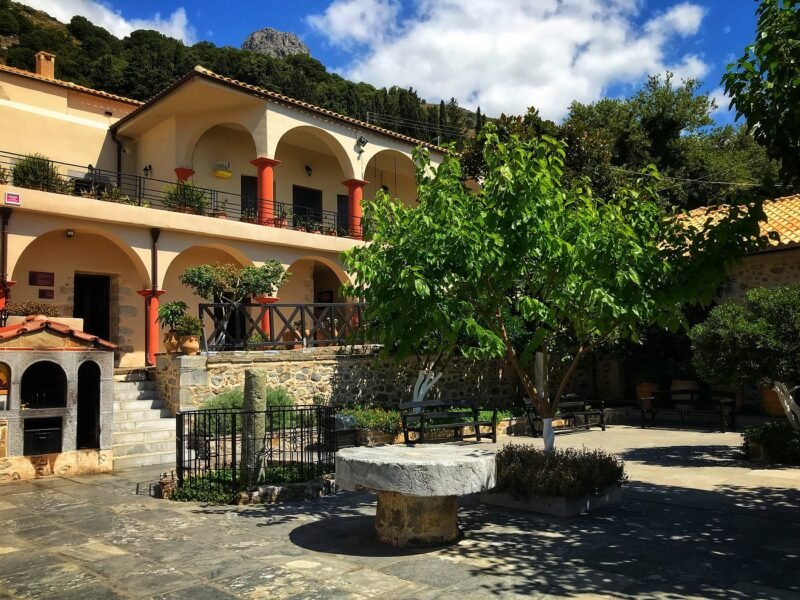
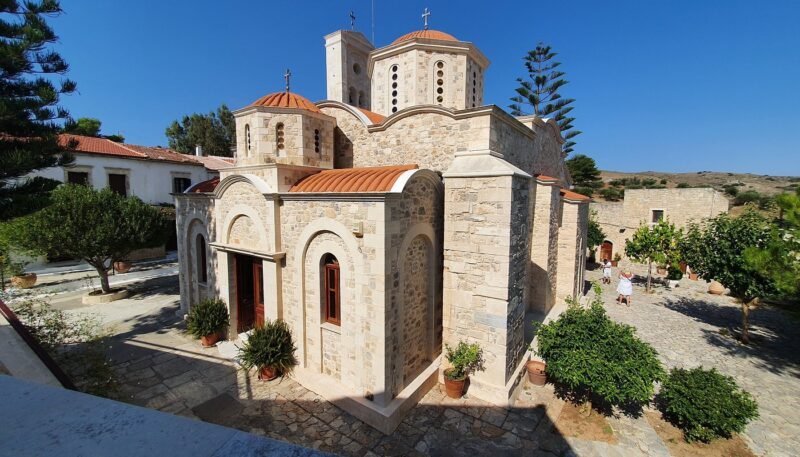
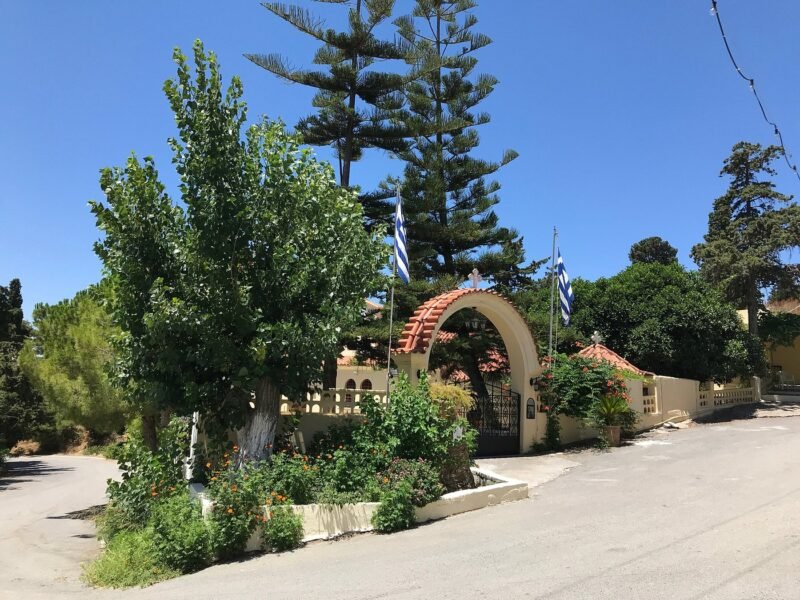
Perched on a forested hill at an altitude of 538 meters, just a short drive from the historic village of Episkopi and 23 km southeast of Heraklion city, Agarathos Monastery (Moni Agarathou) stands as one of the oldest, most historically significant, and most resilient monastic complexes in Crete.
For centuries, this active male monastery has served not only as a profound spiritual refuge but also as a fortified bastion of Cretan culture, education, and resistance during times of foreign occupation.
📜 A Journey Through History & The Legendary Icon
The Legend of the Pomegranate Tree
According to deep-rooted local tradition, the monastery was founded during the late Byzantine or early Venetian period (15th century or earlier) following a miraculous discovery. A monk found an icon of the Virgin Mary hidden inside a Jerusalem sage bush—known as agarathia in the Cretan dialect—giving the monastery its name.
The monk transplanted a pomegranate tree (Rodia) at that exact spot, which grew directly beneath the icon. Today, this centuries-old, sacred pomegranate tree still stands next to the altar (Iero) of the main church. Visitors and pilgrims frequently take its leaves as a blessing, continuing a tradition that spans generations.
The Cradle of the Cretan Renaissance
During the Venetian era, Agarathos was recognized as one of the wealthiest monasteries on the island, but its true wealth lay in its legendary library and scriptorium. It evolved into a major center of letters, theology, and arts.
The monastery educated some of the most influential figures of the Greek Orthodox world and the Cretan Renaissance, including:
-
- Meletios Pegas: Patriarch of Alexandria.
- Meletios Karavas: Renowned scholar.
- Cyril Lucaris: The forward-thinking Patriarch of Alexandria and later Ecumenical Patriarch of Constantinople.
The Fortified Architecture
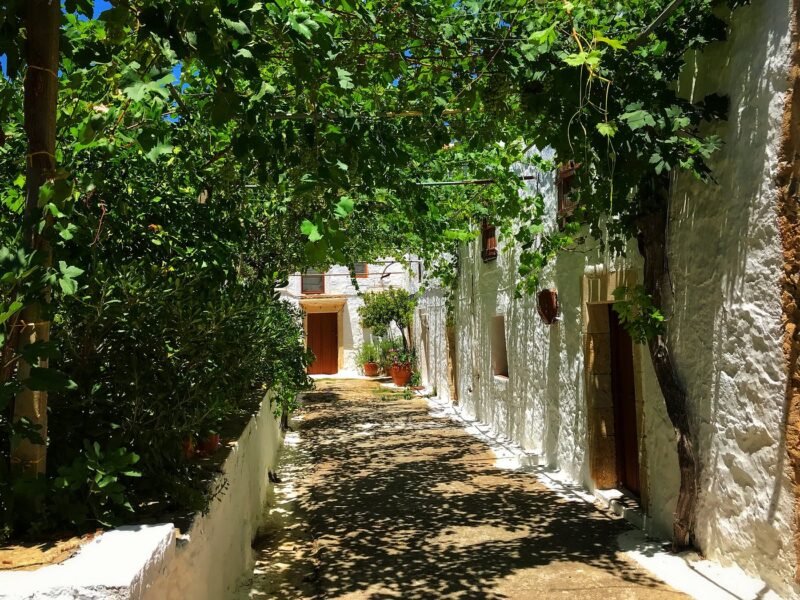
Because Crete was constantly plagued by pirate raids and foreign conquests, Agarathos was built with a distinctive fortress-like architecture. The outer cells form a defensive perimeter, and the central courtyard houses the Katholikon (the main church). Although the monastery was heavily looted, burned, and destroyed by the Ottoman forces during the Cretan War (1645–1669) and the revolution of 1821, its resilient monks rebuilt it each time, preserving its architectural layout.
⛪ What to See Inside the Monastery
-
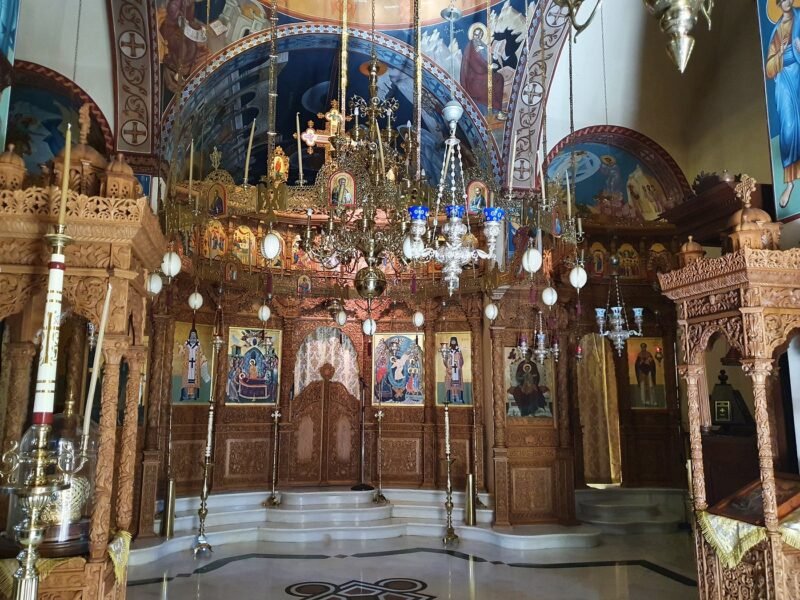
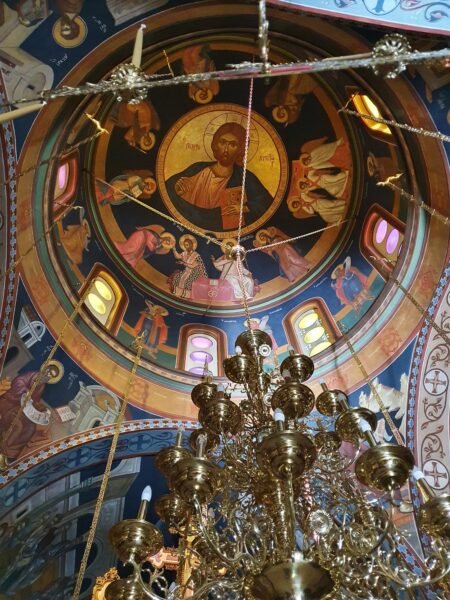
- The Katholikon (Main Church): A beautiful, double-aisled church. The southern aisle is dedicated to the Assumption of the Virgin Mary (celebrated on August 15th) and the northern aisle is dedicated to Agios Minas.
- The Sacred Pomegranate Tree: Located on the exterior wall of the sanctuary, it is an essential stop for every visitor interested in local religious folklore.
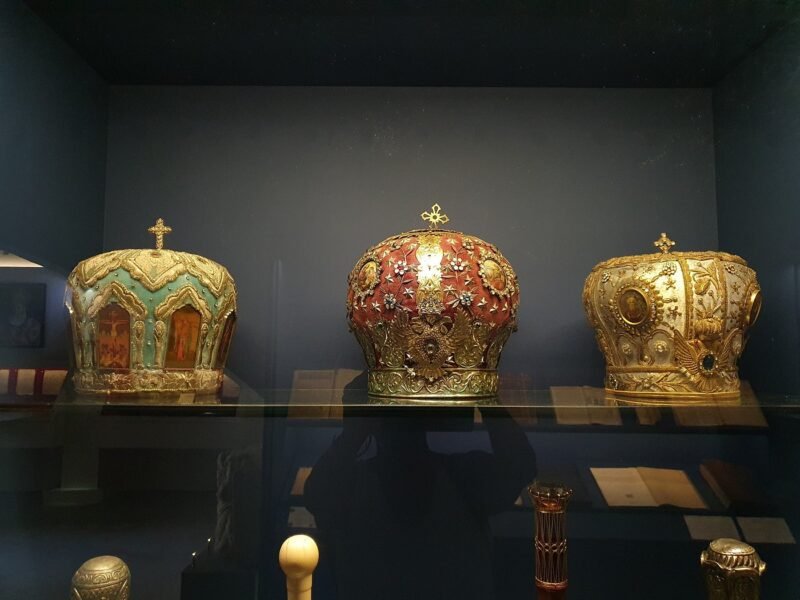
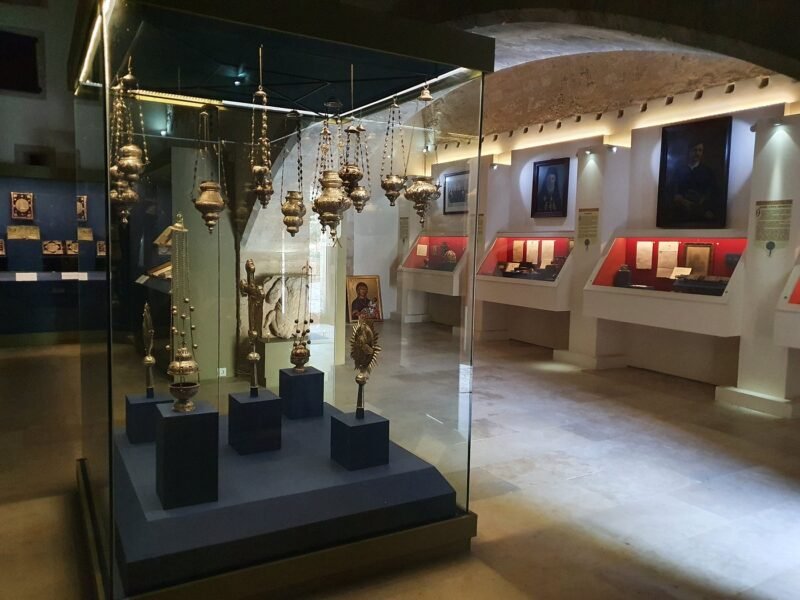
- The Ecclesiastical Museum: A carefully curated space housing surviving historical treasures. Your readers can admire old icons, hand-written gospels, holy vessels, intricate vestments, and remnants of the monastery’s historic library that survived the Ottoman destructions.
- The Peaceful Courtyard: Filled with flowers, cypress trees, and traditional stone pathways, the courtyard offers absolute silence and sweeping, panoramic views of the surrounding Cretan hills.
🥾 Practical Information for CretanHub Readers
-
- Location: Near the villages of Episkopi, Sgourokefali, and Sambas (Heraklion Prefecture).
- Dress Code: As an active monastery with a residing brotherhood of monks, visitors must dress respectfully. Shoulders and knees must be fully covered (skirts/wraps are usually provided at the main gate for visitors).
- Feast Day: The monastery celebrates its primary feast day on August 15th (Deathtoll of the Virgin Mary), drawing thousands of pilgrims from across Crete for a deeply moving traditional service.
🗺️ The Perfect Combined Day-Trip
To maximize their experience, you can advise your readers to combine Agarathos Monastery into a “Hidden Gems of Heraklion” itinerary:
-
- Morning: Walk down the cool, shaded path of the mystical Neraidospilios (Fairy Cave).
- Midday: Find spiritual peace and explore the history at Agarathos Monastery.
- Afternoon: Head to Episkopi for a guided wine and raki tasting at Fournarakis Winery, followed by a hearty, traditional Cretan lunch at Mourelo Tavern.